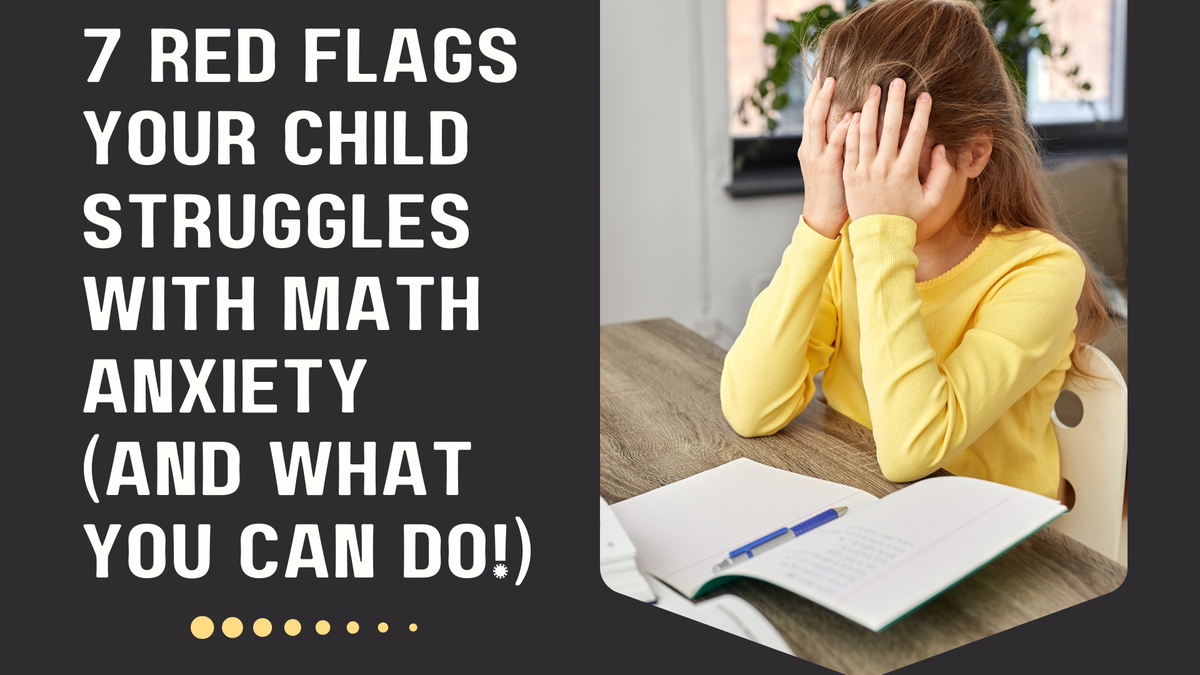
Imagine this: Your child sits down to do their math homework, but within minutes, frustration takes over.
Imagine this: Your child sits down to do their math homework, but within minutes, frustration takes over.
Imagine this: Your child sits down to do their math homework, but within minutes, frustration takes over. They sigh, erase answers repeatedly, or worse—shut down completely. Maybe they even complain of stomachaches before math class or insist they’re just 'bad at math.'
If any of this sounds familiar, your child might be experiencing math anxiety—a challenge that can shake their confidence and make learning feel impossible.
The good news?
You can help! Recognizing the warning signs early can make a huge difference in turning their struggles into success.
In this blog, we’ll uncover seven telltale signs of math anxiety in kids and provide practical steps to boost their confidence and skills.
Causes of Math Anxiety
Math anxiety can be caused by a lack of foundational skills, but even those who do well in math can develop it due to an overreaction to math. High math anxiety can affect people’s academic achievement and future choices, including a lower likelihood of finishing graduate school or pursuing STEM careers. Math anxiety can also hold people back in their daily lives, leading them to avoid everyday situations using math, including money management and salary negotiation.
Research has shown that math anxiety is associated with increased activity in brain regions associated with detecting threats and experiencing pain. Math anxiety is higher in women and girls than in men and boys, due in part to societal stereotypes that math is a masculine domain. Additionally, math anxiety can be caused by a fixed mindset, where individuals believe that their math skills are innate and cannot be improved through effort.
Sign 1 of Math Anxiety: Avoiding Math Homework or Tests
If your child frequently procrastinates, makes excuses, or gets upset when it’s time to do math homework, they may be experiencing math anxiety.
Avoidance is a common defense mechanism when kids feel overwhelmed, especially during math tests.
They might say they have no homework, suddenly remember another assignment that needs immediate attention, or claim they don’t understand the material even before trying. Some children may even resort to tears, tantrums, or extreme frustration when faced with a difficult math problem. This avoidance can lead to falling behind in class, reinforcing the cycle of anxiety and struggle.
Avoidance behavior isn’t just about disliking math—it’s often a sign that your child feels inadequate or fearful of making mistakes. The pressure to get the “right” answer can be paralyzing, especially if they’ve struggled in the past. Over time, this pattern can lower their confidence and make math feel like an impossible challenge rather than a skill to develop.
Strategies for Avoiding Procrastination
Procrastination is a common behavior among individuals with math anxiety. To avoid procrastination, it is essential to develop strategies that promote motivation and engagement in math-related tasks. Here are some strategies that can help:
Break down tasks into smaller, manageable chunks: Procrastination often occurs when tasks seem overwhelming. Breaking down tasks into smaller chunks can make them more manageable and increase motivation.
Set specific goals and deadlines: Setting specific goals and deadlines can help individuals stay focused and motivated. It is essential to make sure that goals are realistic and achievable.
Create a conducive learning environment: The learning environment can have a significant impact on motivation and engagement. Creating a conducive learning environment that is free from distractions can help individuals stay focused and motivated.
Seek help when needed: Seeking help when needed is essential for overcoming math anxiety. Individuals should not be afraid to ask for help from teachers, tutors, or classmates.
Practice relaxation techniques: Relaxation techniques such as deep breathing, progressive muscle relaxation, and visualization can help individuals manage anxiety and stay focused.
By developing these strategies, individuals can avoid procrastination and reduce math anxiety. It is essential to remember that overcoming math anxiety takes time and effort, but with the right strategies and support, it is possible to achieve success in math.
Sign 2 of Math Anxiety: Physical Symptoms of High Math Anxiety
Does your child complain of headaches, stomachaches, or feeling sick before math class or tests?
These physical symptoms aren’t just random—they’re often the body’s way of signaling deep-seated stress and anxiety. When children feel overwhelmed by math, their fight-or-flight response can kick in, leading to real, distressing discomfort.
Some kids might even ask to stay home from school or visit the nurse’s office regularly to avoid math altogether. If these patterns persist, it could indicate that math anxiety is significantly impacting their well-being and academic performance.
What To Do:
Encourage relaxation techniques like deep breathing before math activities.
Create a stress-free environment for studying.
Normalize mistakes as part of the learning process.
Sign 3 of Math Anxiety: Low Confidence in Math Skills
If your child frequently says, “I’m just bad at math” or “I’ll never understand this,” they may have low self-confidence due to math struggles, which can be exacerbated by test anxiety.
Negative self-talk can reinforce their fear of failure, making them less likely to engage with math problems and more likely to give up before even trying. This mindset can stem from repeated struggles, past failures, or even comparisons to peers who seem to grasp math more easily.
Over time, this lack of confidence can create a self-fulfilling prophecy, where the belief that they are “bad at math” prevents them from developing the skills they need to improve. Encouraging a positive attitude and shifting their mindset toward growth can help break this cycle and prevent math anxiety.
What To Do:
Praise effort, not just results.
Show them examples of growth and improvement over time.
Use a growth mindset approach to encourage perseverance.
Sign 4 of Math Anxiety: Taking a Long Time to Complete Math Homework
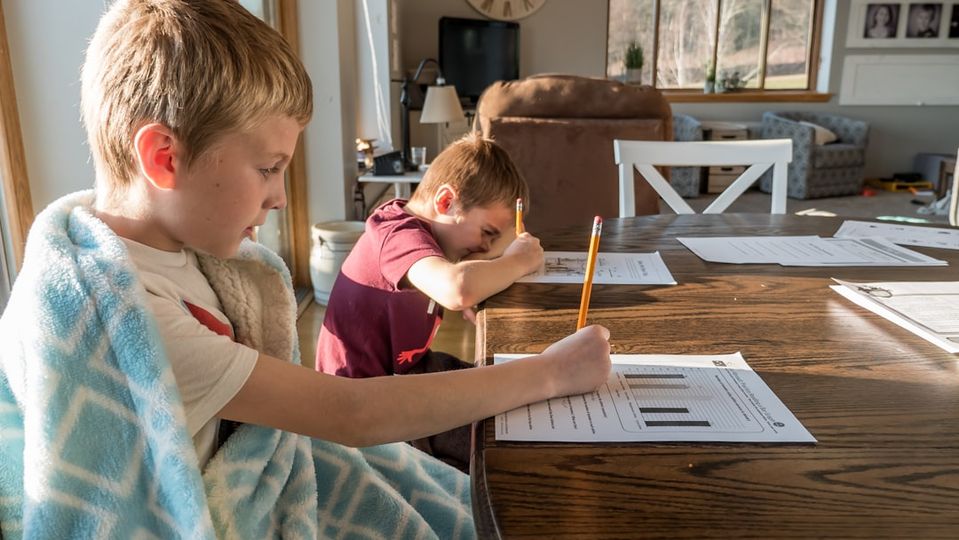
Spending an excessive amount of time on simple problems could indicate that your child is struggling with comprehension or problem-solving strategies.
They may second-guess themselves, repeatedly erase and rewrite answers, or feel overwhelmed by multi-step problems. Negative self-talk can reinforce their fear of failure, especially if they experience high math anxiety, making them less likely to engage with math problems and more likely to give up before even trying. This could be a sign that they lack confidence in their approach or are missing key foundational skills necessary to solve problems efficiently.
If they frequently ask for help on basic concepts or seem mentally exhausted after a short period, it may be time to reassess their understanding and provide targeted support to build their confidence and fluency.
What To Do:
Teach problem-solving strategies and time management skills.
Ensure they understand the foundational concepts before moving on.
Use visual aids, manipulatives, or interactive learning tools.
Sign 5 of Math Anxiety: Frequent Math Mistakes
Consistently making the same errors, reversing numbers, or miscalculating simple equations may suggest a deeper issue with number sense or understanding math operations when solving mathematical tasks.
Some children struggle with grasping numerical relationships, place value, or operational rules, leading to repeated mistakes even after practicing the same types of problems. These errors can stem from cognitive processing challenges, a lack of fluency in basic math facts, or even anxiety that causes rushed and careless mistakes.
If left unaddressed, these difficulties can make more advanced math concepts increasingly frustrating, reinforcing a cycle of struggle and discouragement.
What To Do:
Identify patterns in their mistakes to target specific areas for improvement.
Use hands-on activities to reinforce number sense.
Consider adaptive learning programs that personalize instruction.
Sign 6 of Math Anxiety: Emotional Reactions to Math
Tears, frustration, or anger when doing math can be a sign that your child is feeling overwhelmed or embarrassed by their struggles, leading to poor math performance. These emotional reactions often stem from a deep-seated fear of failure, frustration over not understanding concepts, or the pressure to perform well.
If your child frequently breaks down, avoids math altogether, or expresses extreme emotions during math-related activities, it could indicate that their struggles go beyond a simple dislike for the subject.
Left unaddressed, these feelings can develop into a long-term aversion to math, making it even harder for them to engage and improve over time.
What To Do:
Provide reassurance and emotional support.
Keep math sessions short and engaging.
Help them develop a positive attitude toward learning math instead of harboring negative attitudes.
Sign 7 of Math Anxiety: Lack of Interest in Math
If your child used to enjoy math but now dreads it, or if they disengage completely in class, they might be struggling with confidence and motivation, often due to developing math anxiety.
A sudden loss of interest often signals underlying frustration, whether from difficulty grasping new concepts, feeling left behind compared to peers, or past negative experiences with math.
This disengagement can manifest as reluctance to participate in class discussions, lack of enthusiasm for math-related activities, or even avoiding math homework altogether. Over time, this disinterest can snowball into a belief that they are simply “not a math person,” making it even harder for them to regain confidence and motivation.
What To Do:
Connect math to real-life interests, like sports, cooking, or video games.
Use gamified learning apps to make math fun and interactive.
Encourage a supportive learning environment at home.
Understanding Math Anxiety: The Mathematics Anxiety Rating Scale (MARS)
If your child shows signs of math anxiety, you’re not alone—many students experience stress and frustration when faced with numbers. But how can you tell if your child's struggles are a normal learning challenge or a deeper issue that requires intervention? That’s where the Mathematics Anxiety Rating Scale (MARS) comes in.
MARS is a research-backed tool designed to measure the level of math anxiety in students and adults. Developed in the 1970s by psychologists Richard Suinn and Jerri M. Winston, this scale helps identify how anxious a person feels in different math-related situations—whether it’s solving a tough equation, taking a test, or even thinking about numbers.
The test consists of a series of statements rated on a scale, helping educators and parents pinpoint the severity of a child’s anxiety and its impact on their learning.
Why is this important? Identifying math anxiety early allows for targeted support before it leads to long-term struggles.
Educators and tutors can use MARS to understand which aspects of math are the most stressful for a child and tailor their teaching methods accordingly. For example, if a student feels anxious about timed tests but is comfortable with hands-on problem-solving, a tutor can adjust their approach to build confidence in a low-pressure environment.
Standardized Math Tests and Math Anxiety: Breaking the Cycle
Standardized math tests are designed to assess a student’s math ability, problem-solving skills, and mathematical reasoning, but for many children, they trigger overwhelming stress and math anxiety. The pressure to perform under timed conditions, fear of making mistakes, and the weight of test scores can lead to poor performance, even for students who understand the material.
Research has shown that students with high math anxiety tend to struggle more on math-related tasks, not because they lack the skills, but because anxiety interferes with their ability to recall information and apply mathematical concepts effectively.
Studies, including those using the Mathematics Anxiety Rating Scale (MARS), reveal that test anxiety is a significant factor in students' engagement and overall math performance. Many students, particularly those with past negative experiences in math class, may develop an aversion to math examinations and even take fewer math courses as they progress through school. This avoidance can lead to long-term consequences, including limited career options in STEM fields and reduced confidence in tackling math tasks in everyday life.
So, how can we help students overcome math anxiety and succeed on tests? The answer lies in math pedagogy that emphasizes a growth mindset, relaxation techniques, and targeted math instruction. Teaching students effective study skills, reducing the emphasis on speed in mental arithmetic, and creating a supportive learning environment can all help reduce test anxiety.
Additionally, working with a tutor who understands the emotional side of learning math—such as a Thinkster Math tutor—can provide personalized strategies to build confidence and improve math performance.
By addressing math anxiety early and fostering a positive approach to math, parents and educators can help students develop resilience and perform at their full potential on curriculum math tests and beyond.
Math Anxiety in College Students: Challenges and Solutions
For many college students, math anxiety doesn’t disappear after high school—it often intensifies. The transition to university education brings more advanced mathematical tasks, higher expectations, and the added pressure of math examinations that can impact academic success.
Research shows that math anxious individuals often avoid courses requiring mathematical reasoning, leading them to take fewer math courses or even switch majors to escape math-heavy subjects. This avoidance can limit career opportunities, especially in fields that require strong math skills, such as science, engineering, and finance.
Previous research has linked developing math anxiety in college students to poor performance on tests, difficulty in solving mathematical tasks, and impaired working memory during assessments. This is especially concerning for students in undergraduate psychology programs or business-related fields that require statistics courses. Many students also struggle with statistics anxiety, which affects their ability to engage with data analysis and mathematics performance in research-based coursework.
How Can College Students Conquer Math Anxiety?
Adopt a Growth Mindset – Instead of believing that math ability is fixed, students should recognize that their skills can improve with practice and persistence. Using math books that emphasize conceptual understanding rather than rote memorization can be helpful.
Utilize Relaxation Techniques – Anxiety reduction strategies like deep breathing, meditation, and positive self-talk can help students stay calm while doing math homework or taking a math exam.
Seek Support Through Tutoring and Study Groups – Working with a math tutor or joining a peer study group can boost students' engagement and make learning mathematics feel less overwhelming.
Improve Study Skills and Time Management – Many students with math anxiety struggle because they procrastinate, leading to last-minute cramming that increases stress. Creating a structured study plan and breaking down mathematical problems into smaller steps can make learning more manageable.
Take Advantage of University Resources – Many universities offer math support centers, academic coaching, and workshops on overcoming math anxiety. Seeking help early can prevent poor math performance and build confidence in math-related tasks.
Challenge Negative Attitudes Toward Math – Math myths like "I'm just not a math person" or "Only geniuses are good at math" contribute to anxious responding in academic situations. Reframing math as a skill that can be developed over time can help students approach math tasks with a more positive mindset.
By taking proactive steps to reduce math anxiety, college students can improve their mathematics performance and open doors to a wider range of academic and career opportunities.
Final Thoughts
Recognizing the signs of math anxiety in kids early can help prevent long-term struggles. A sudden loss of interest often signals underlying frustration, whether from difficulty grasping new concepts, feeling left behind compared to peers or past negative experiences with math. You can help your child build confidence and develop a strong foundation in math by using positive reinforcement, adaptive learning tools, and supportive strategies.
A structured approach with expert guidance can make all the difference if their struggles persist.
Thinkster’s personalized math tutoring program tailors lessons to your child’s unique needs, reinforcing concepts they find challenging and helping them build problem-solving skills with confidence. With one-on-one coaching, real-time feedback, and engaging digital worksheets, Thinkster transforms math from a source of stress into a subject they can master.
Ready to help your child overcome math anxiety? Schedule a call with a Thinkster Academic Advisor and receive expert guidance and recommendations.
K
Kendra Straley
Expert Math Educator at Thinkster
Thinkster founder Raj Valli compares Thinkster vs Kumon side-by-side i...