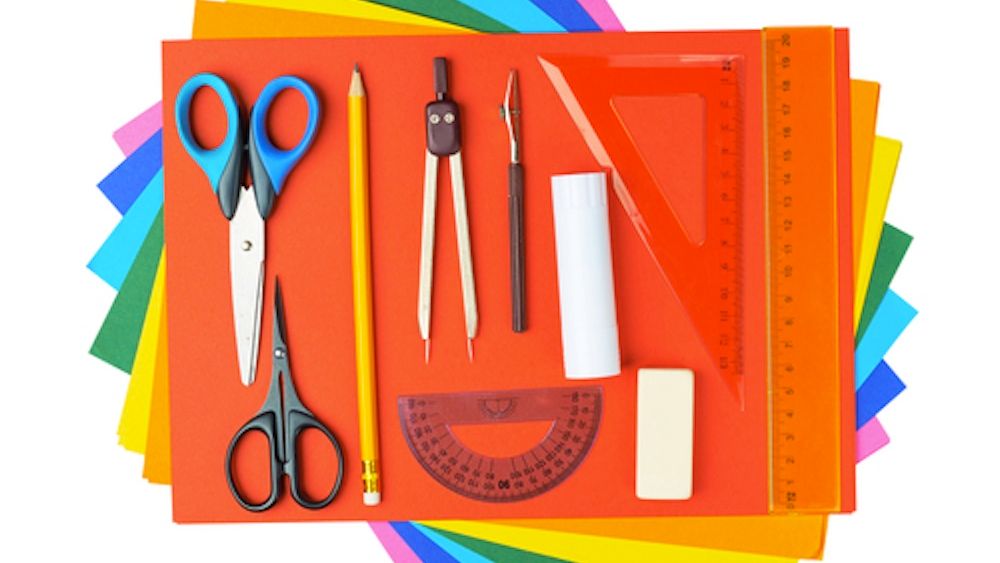
Math lends itself well to worksheets, but some students find worksheets boring or challenging. If your child is tired of worksheets, grab some scissors and glue and get crafty – Here are some 5th grade math worksheets you can make at home with your child.
1. Tessellations
Tessellations are a place where art and math intersect, making them the ideal way to get creative with 5th grade math worksheets. Tessellations are patterns made with shapes that fit neatly together and cover the paper. Have your child choose polygons that fit together and fill the paper with those.
Tessellation pages can be used to teach many things. The most obvious is geometry, but you can also use them to teach fractions. Have the students color the tessellations they made, then figure some basic fractions from what they colored. If the fraction needs to be reduced, have them practice reducing. The sky’s the limit with what you can teach about fractions using a tessellation drawing.
2. Math Fortune Teller
Remember the paper “fortune teller” you made as a kid to predict who you would marry and where you would live? Make one of these for math. Label the four corner squares “mean, median, mode and range,” which are common terms on 5th grade math worksheets. Then, fill in random sets of numbers on each of the interior triangles. Finally, on the triangles that fold out to give the “answer,” make blanks to write the mean, median, mode and range.
Play this game with your child like the traditional “fortune teller” game you played as a kid. Have the child choose which item they will solve, then count the letters. When the first data set is shown, have the child choose a number from one of them to count the second round. Finally, the final data set chosen is the one your child uses to figure the mean, median, mode or range.
3. Cheese-it Area and Perimeter
Easy and tasty, this activity is perfect for hungry kids after school. Have your child draw a square on a piece of paper, then fill in the square with cheese-it crackers. Each cracker represents one unit. Have them count the cheese-its to figure out the area and perimeter of the shape.