No parent would accept the idea that their child is just “bad at reading” and leave it at that. So why do we accept the idea that some kids are just “bad at math”?
Surprisingly, 1/3 of all US schoolchildren will end up in remedial math. Worse yet, 93% of American adults claim to experience some level of math anxiety (and for 17% of American adults, that math anxiety is high)!
If we replace the word “math” with “reading,” we can quickly see how much of a problem this is. Imagine if 93% of adults felt anxious whenever they had to read something! That would never fly – it would be a major crisis!
Why should we feel different about math?
What is Math Anxiety?

Math anxiety was best described by Educational Psychologist Frank Richardson and Counseling Psychologist Richard Suinn.
They defined it as “A feeling of tension and anxiety that interferes with the manipulation of numbers and the solving of mathematical problems in a wide variety of ordinary life and academic situations.”
This definition is actually revealing because it points out that math anxiety is not merely an unpleasant feeling or state, but much more. Beyond the uncomfortable experience, the anxiety actually has real-world consequences – it stops sufferers from being able to do math!
When students are in a state of anxiety, they can’t think clearly or logically, which is precisely what math requires.
And the result is a vicious circle; fear of math leads to struggling in math which leads to more fear of math.
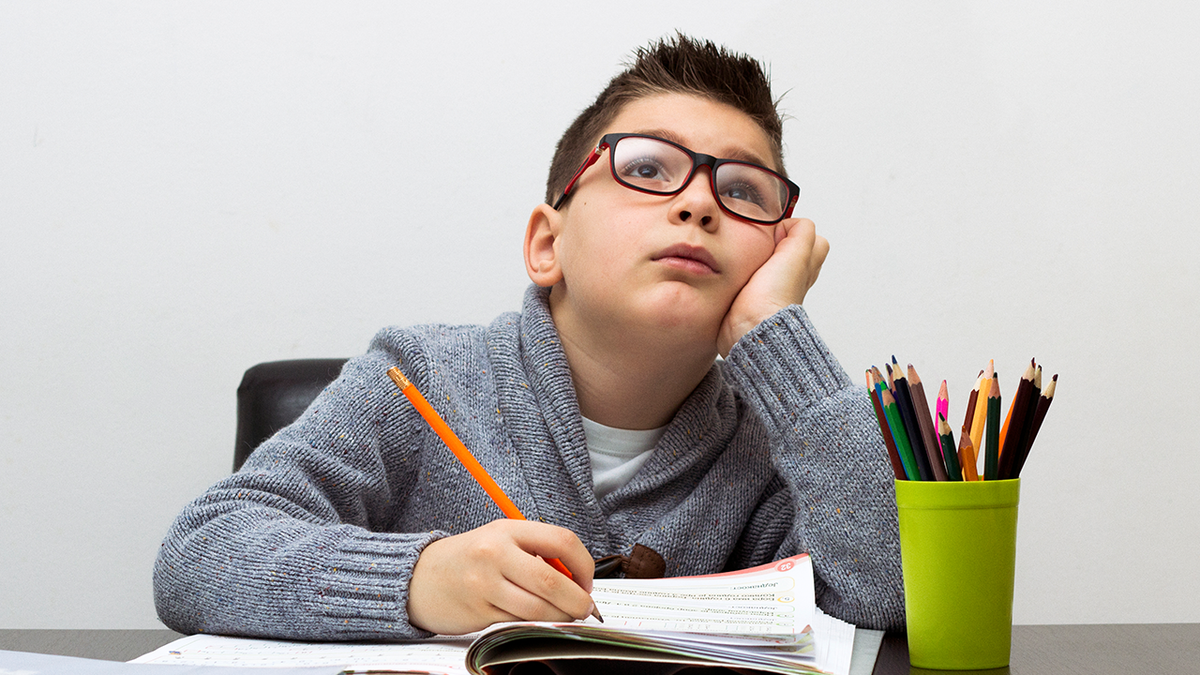
In the end, math anxiety can leave individuals convinced that they’re simply incapable of doing math. For children, the belief in their inability to do math, combined with the anxiety math triggers, gets in the way of solving even the simplest of problems.
Children might freeze when all they have to do is solve for X, for example. When this happens, kids often begin to hate math and want to avoid it at all costs. Some children even start to hate school altogether, and that can sabotage their progress in school, their career, and life.